
While browsing a local bookshop for Christmas gifts last month, I happened upon a cover that encapsulated my 2025 perfectly:
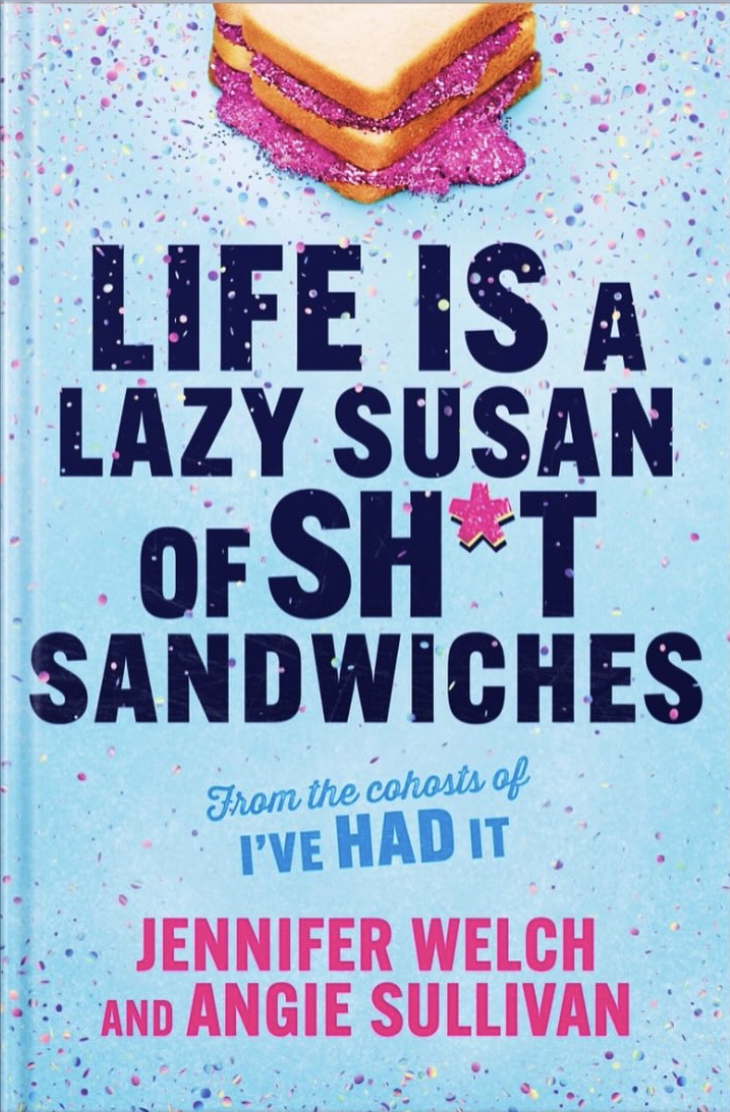
That is to say, it was not a great year. A confluence of uncontrollable factors made 2025 a year that I am eager to forget.
In that sense, the ol' yearly reflection ritual is a welcome opportunity to mine the last 12 months for nuggets of positivity, and then mentally turn the page.
Learning
Nothing shakes you out of your comfort zone and gives you a fresh perspective like learning a new skill. It's something I don't do nearly enough, but this year I dabbled in learning Japanese and chess while leeching off my generous neighbour's Duolingo family plan. I continue to be terrible at both, but it's fun to rediscover the "beginner's mind" and eagerly receive the teachings of repeated failure.
A decade after my first failed attempts, I also tried my hand at baking sourdough again. This time I found more regularity and success, thanks to a significantly more forgiving recipe. Since I hate wasting anything, these crackers are a welcome way to use the discard.
Tactility and experimentation make bread baking a deeply satisfying activity. It doesn't hurt that you end up with something that tastes far better, and costs $5 less, than a commercial loaf.
Reading
Readers of this blog will know that my chief vanity metric is the number of books read for the year. With only a little cheating (due to partially completed slogs), I landed at 50, with the following highlights:
- Brave New Words by Sal Khan
- Nexus by Yuval Noah Harari
- The Future is Analog by David Sax
- Corpse Talk - Queens and Kings, Scientists, Women (delightful educational graphic novels recommended by my kid)
- Refactoring UI (re-read for the third time, but it's so good)
- The Notebook: A History of Thinking on Paper by Roland Allen
- Norwegian Wood by Haruki Murakami
- Empire of AI by Karen Hao
- Careless People by Sarah Wynn-Williams
- The Price of Time by Edward Chancellor
- Chip War by Chris Miller
- Showa: A History of Japan (1944-1953, and 1953-1989)
- Enshittification by Cory Doctorow
Challenging myself to take a full page of notes for almost every book paid dividends. While typing the preceding list, I referred back to notes on several books and it helped refresh my understanding. After years of forgetting what I read almost immediately, this might be the start of a solution.
Watching
I'm no cinephile, but several movies I watched this year were outstanding:
- Everything Everywhere All at Once
- Parasite
- If I Had Legs I'd Kick You
Also, S2E3 of The Rehearsal ("Pilot's Code") may be my all-time favorite episode of television. I have not laughed that hard in a very long time, and Nathan Fielder is a treasure. I'm proud to live not far from the top business school where he earned really good grades.
Listening
Losing Sly Stone and D'Angelo, two of the all-time greats, was a gut punch. Sly's mental deterioration since the 70s was well-documented, but I thought D'Angelo had at least one more great album in him. I'll leave you with this achingly beautiful version of Africa.
Gaming
I started rediscovering my childhood love of video games after a multi-decade hiatus. Playing through Ocarina of Time was a highlight, and convinced me to get a Switch 2. I'm astounded by how compelling game storytelling and user interfaces are now, and it's a treat to explore them with my kids. Mario Kart World and Moving Out have both been big hits for couch co-op in our household.
Computering
2025 was a year of massive change for the field of software engineering, as generative AI has turned the economics of building software inside out. I tried to summarize the changes in my previous post, but things are shifting so quickly that I struggle to put into words either the current state of play, or the last year of changes.
I have been cured of the comfortable delusion that the status quo of fully "hand-crafted" software will be the way I work forever. The following quote from Simon Willison perfectly summarizes the uncertainty I feel:
We will find out if the Jevons paradox saves our careers or not. This is a big question that anyone who’s a software engineer has right now: we are driving the cost of actually producing working code down to a fraction of what it used to cost. Does that mean that our careers are completely devalued and we all have to learn to live on a tenth of our incomes, or does it mean that the demand for software, for custom software goes up by a factor of 10 and now our skills are even more valuable because you can hire me and I can build you 10 times the software I used to be able to? I think by three years we will know for sure which way that one went.
Elsewhere, I think people are sleeping on how rapidly HTML & CSS are improving. Recent standardization of popovers, anchor positioning, invoker commands, view transitions, and more, will make so much repetitive and needlessly complex JavaScript unnecessary. With the React ecosystem trending toward the unrestrained accumulation of accidental complexity (cough Server Components cough), my money's on a new, leaner, shape of web applications emerging in the not-too-distant future.
Coda
Anyways, thank you for reading my annual ramble. The backdrop of world events makes it hard to remember, but 2026 could be a whole lot better.